


“I've been a longtime fan a beetroot supplements when I stumbled across pulse8 I look at the ingredients I was impressed decided to give Pulse8 a try. It’s my new Circulation supplement. Go look at the ingredients for yourself. So much more than just Beetroot!”
Verified Customer

DID YOU NOTICE?
A customer once asked why our label doesn't list fillers.
Because there aren't any.
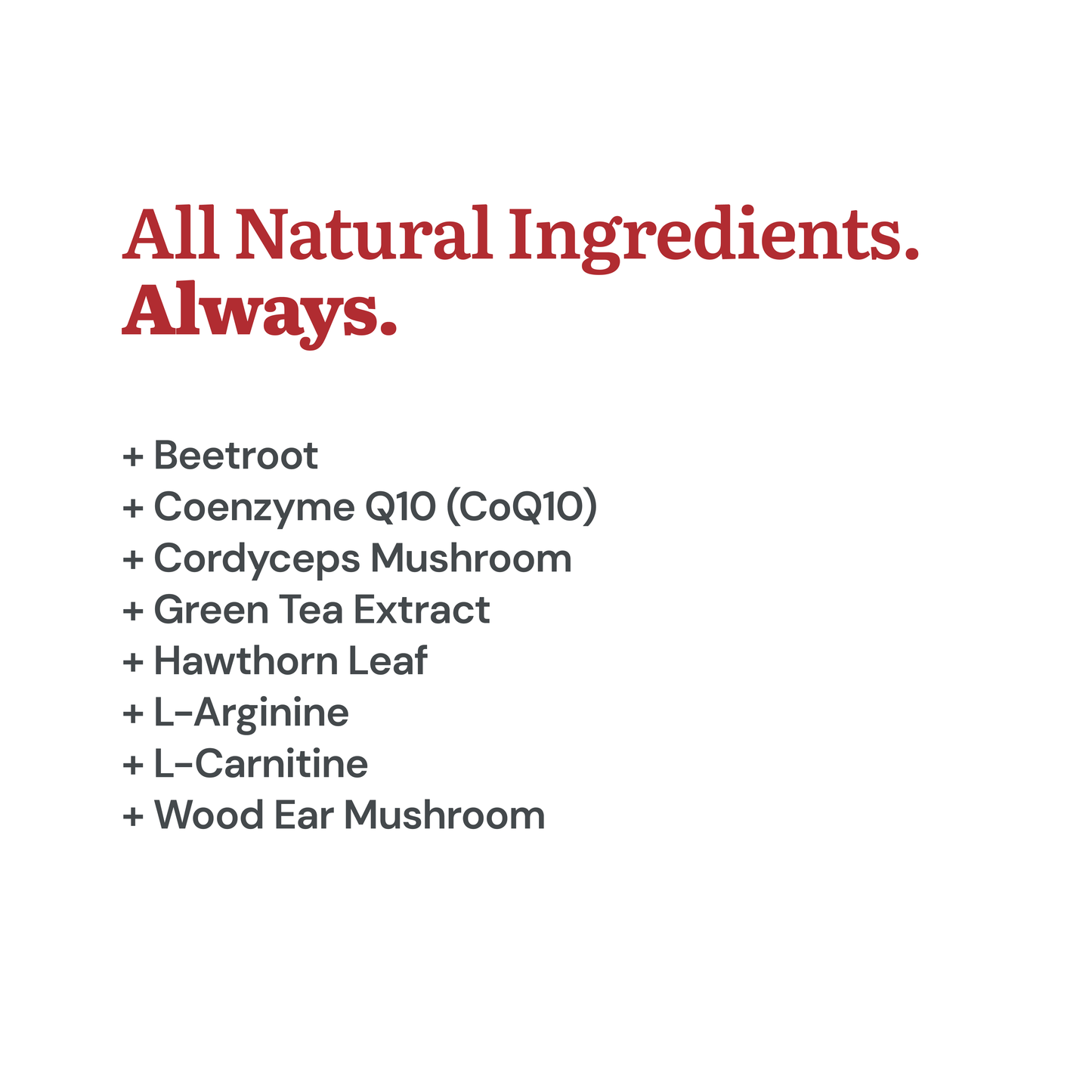
Every ingredient in every capsule has a purpose.
Pulse8: Circulation & Cardiovascular Support
Pulse8: Circulation & Cardiovascular Support
Your body runs on circulation. Pulse8 is built to keep it running right.
Key Benefits
- Your body runs on circulation and Pulse8 is built to keep it running right.
- Supports the delivery of oxygen and nutrients that every organ, muscle, and nerve depends on.
- Helps your hands and feet stay warm when poor circulation leaves them cold and uncomfortable.
- Helps support faster healing by getting circulation to the tissues that need it most.
- Supports the steady stamina and endurance that comes from a body that is properly supplied.
- Helps fight the heavy, sluggish feeling that comes when circulation isn't keeping up.
- Supports mental sharpness and focus because the brain needs circulation too.
- Helps the rest of your body work better because everything works better when circulation does.
- 10 physician-selected ingredients supporting the system your entire body depends on.
How Pulse8 Works
Most people don't wake up thinking about circulation. But they do notice when something feels off the sluggishness, the cold hands and feet, the energy that runs out too soon, the recovery that takes longer than it should.
Circulation is behind more of that than most people realize.
When your circulation can efficiently deliver oxygen and nutrients to your muscles, nerves, and organs, everything functions better. Energy and focus come more naturally. The body simply works the way it was designed to.
Pulse8, physician-formulated to support your natural circulation systems, not with a single ingredient, but with 10 carefully selected ingredients that work together to support healthy blood flow, oxygen delivery, and the performance that depends on it.
Couldn't load pickup availability
In stock




Frequently Asked Questions
Nitric oxide production decreases significantly with age, contributing to stiffer blood vessels, reduced circulation, higher resting blood pressure, and slower recovery from physical exertion. This is one of the main reasons energy and physical capacity tend to decline gradually over time. Supporting nitric oxide levels is one of the most evidence-based strategies for maintaining cardiovascular function and vitality as the body ages.
Yes. When circulation is reduced, muscles and organs receive less oxygen and nutrients, which translates directly to lower energy and slower recovery. Many people attribute this fatigue to stress or aging without realizing that supporting circulation can meaningfully improve how they feel and function day to day.
Yes. The brain consumes a disproportionate share of the body's oxygen and glucose. Reduced blood flow to the brain manifests as mental fatigue, difficulty concentrating, and sluggish thinking. Supporting circulation supports sharper, more consistent cognitive performance.
Yes. Cerebrovascular circulation, the blood flow to and within the brain, is directly linked to memory, focus, processing speed, and mood. Many Pulse8 users report clearer thinking and improved mental energy alongside the cardiovascular benefits.
Yes. Pulse8 supports multiple aspects of cardiovascular health including vessel flexibility, healthy blood flow dynamics, antioxidant protection for vascular tissue, and the cellular energy production that heart and muscle tissue depend on. It is designed as long-term cardiovascular support, not a short-term fix.
Yes. Improving circulation means improving oxygen delivery to the muscles, brain, and every organ that depends on it. This is why Pulse8 users often report benefits that extend beyond the cardiovascular system, including better energy, faster recovery, and sharper focus.
Yes. Better circulation improves oxygen delivery to working muscles during exercise and accelerates the removal of metabolic waste afterward. This supports both performance and faster recovery, making Pulse8 useful for anyone who is physically active regardless of fitness level.
Chronic inflammation damages the inner lining of arteries, promotes oxidative stress in vascular tissue, and contributes to arterial stiffness over time. These changes raise blood pressure and reduce circulatory efficiency. Pulse8 addresses inflammation as a core part of its cardiovascular support approach.
Many people notice improved energy and circulation within the first one to two weeks. For blood pressure support and vessel flexibility, the most meaningful results typically emerge after four to six weeks of consistent daily use.
Yes. Pulse8 pairs particularly well with Active8 MAX for comprehensive circulation and energy support, and with Sense8 for people managing both cardiovascular and nerve health concerns. The products are designed to work together as a coordinated system.
Yes. Pulse8 is designed for consistent daily use as part of an ongoing cardiovascular wellness routine. The benefits to vessel health, nitric oxide production, and circulatory efficiency build progressively with regular supplementation.
Pulse8 can affect blood pressure through its nitric oxide-supporting ingredients. If you take blood pressure medications, heart medications, or blood thinners, consult your physician before starting Pulse8 to ensure compatibility and avoid unintended additive effects.
Take Pulse8 with a meal, preferably in the morning. Do not discontinue any prescribed cardiovascular medications without first consulting your physician.
We offer a 60-day money-back guarantee. If you are not satisfied for any reason, contact us for a full refund.
Every cell, muscle, nerve, and organ in your body depends on circulation to receive the oxygen and nutrients it needs to function.
And sometimes the first signs that circulation deserves more attention aren't dramatic.
Your hands and feet may seem colder than they used to. Your legs may feel heavier after a long day. You may notice that you don't have quite the same staying power you once did.
Most people don't immediately connect those everyday changes with the system responsible for delivering oxygen and nutrients throughout the body.
But circulation is more than simply moving blood.
Your heart has to keep it moving. Your blood vessels need to remain healthy and responsive. Blood has to travel efficiently through vessels large and small to reach the tissues that depend on it.
That's why we didn't formulate Pulse8 around one ingredient or one pathway. We built it around several, each with a specific role to play.
Pulse8 contains ten carefully selected ingredients, each included for a specific reason.
CoQ10 and L-Carnitine support cellular energy and cardiovascular function. Hawthorn has been studied for vascular function. Nattokinase has been researched for healthy blood flow. Green Tea Extract provides antioxidant support. Cordyceps has been studied for exercise performance and oxygen utilization. Potassium supports normal cardiovascular function.
Each remaining ingredient has a job to do, and each was selected for the role it plays within the broader formula.
That's the thinking behind Pulse8: support circulation more broadly rather than putting the entire job on one ingredient.
Ingredients per serving:
- Vitamin B3 (as Nicotinic Acid); 40 mg
- Potassium (as Potassium Citrate); 100 mg
- CoQ10 (Micronized Ubiquinol); 240 mg
- L-Carnitine; 180 mg
- Cordyceps (30% Beta Glucans); 150 mg
- Hawthorn Berry (5% Total Flavonoids); 124 mg
- Green Tea Extract (50% EGCG); 120 mg
- Wood Ear Mushroom (Auricularia Polytricha); 55 mg
- Nattokinase (providing 2000 FU); 100 mg
- Cayenne Pepper Extract; 30 mg
Why we include each ingredient:
Vitamin B3 (as Nicotinic Acid); An essential B vitamin that supports normal energy metabolism and helps the body convert food into cellular energy.
Potassium (Potassium Citrate); An essential mineral that supports healthy blood pressure, heart rhythm, and overall cardiovascular function.
CoQ10 (Micronized Ubiquinol); The active, highly absorbable form of CoQ10, supports cellular energy production, heart health, and cardiovascular function.
L-Carnitine; An amino acid that supports heart muscle function, energy production, and healthy cardiovascular metabolism.
Cordyceps; A functional mushroom that supports cardiovascular endurance, oxygen utilization, and overall heart health.
Hawthorn Berry; A traditional botanical that supports healthy blood pressure, circulation, and overall cardiovascular wellness.
Green Tea Extract; Rich in antioxidants that support cardiovascular health, healthy blood flow, and metabolic function.
Wood Ear Mushroom; A nutrient-rich mushroom that supports healthy circulation, blood flow, and cardiovascular function.
Nattokinase; A natural enzyme that supports healthy blood flow, circulation, and cardiovascular health.
Cayenne Pepper Extract; Provides naturally occurring capsaicinoids that have been studied for their role in vascular and metabolic function.
Take 2 capsules daily, preferably with food. Split between morning and evening if desired.
THE RESEARCH BEHIND PULSE8
Pulse8 combines ten ingredients selected to support circulation, cardiovascular function, healthy blood flow, and cellular energy. Below is some of the human research behind the ingredients.
CoQ10 (Micronized Ubiquinol) — 240 mg
Studied in human systematic reviews and meta-analyses for cardiovascular support, including its effect on blood pressure.
L-Carnitine — 180 mg
Studied in randomized trials and systematic reviews for its role in cardiovascular and cellular energy metabolism.
Cordyceps — 150 mg
Studied in a systematic review and meta-analysis examining exercise performance and oxygen utilization in healthy adults.
Hawthorn Berry — 124 mg
A traditional cardiovascular botanical studied in a randomized, controlled trial examining vascular function.
Nattokinase — 100 mg / 2,000 FU
Studied in a systematic review and meta-analysis examining cardiovascular health and blood-flow-related measures.
Green Tea Extract — 120 mg
Studied in a meta-analysis of randomized trials for its effect on blood pressure.
Niacin (Vitamin B3, as Nicotinic Acid) — 40 mg
An essential B vitamin with an established nutritional role in normal energy metabolism.
Potassium (Potassium Citrate) — 100 mg
An essential mineral with a well-established role in normal cardiovascular and muscular function.
Wood Ear Mushroom — 55 mg
A traditional food ingredient with early research interest in circulatory support. Human clinical trial evidence specific to this ingredient is limited.
Cayenne Pepper Extract — 30 mg
Capsaicin and capsaicinoids, naturally occurring compounds in cayenne pepper, have been studied in randomized human trials for their effects on cardiovascular and metabolic measures. Systematic reviews have examined their effects on blood lipids, blood pressure, and related cardiovascular risk factors, although results across studies have varied.
Full References
- Furchgott RF, Zawadzki JV. The obligatory role of endothelial cells in the relaxation of arterial smooth muscle by acetylcholine. Nature. 1980;288:373-376.
- The Nobel Prize in Physiology or Medicine 1998. Robert F. Furchgott, Louis J. Ignarro and Ferid Murad. Awarded for discoveries concerning nitric oxide as a signaling molecule in the cardiovascular system.
- Ashor AW, Lara J, Siervo M, et al. Exercise modalities and endothelial function: a systematic review and dose-response meta-analysis of randomized controlled trials. Sports Medicine. 2015;45:279-296.
- Asher GN, Viera AJ, Weaver MA, et al. Effect of hawthorn standardized extract on flow mediated dilation in prehypertensive and mildly hypertensive adults: a randomized, controlled cross-over trial. BMC Complementary and Alternative Medicine. 2012;12:26.
- Pittler MH, Guo R, Ernst E. Hawthorn extract for treating chronic heart failure. Cochrane Database of Systematic Reviews. 2008.
- Li X, Long J, Gao Q, Pan M, Wang J, Yang F, Zhang Y. Nattokinase supplementation and cardiovascular risk factors: a systematic review and meta-analysis of randomized controlled trials. Reviews in Cardiovascular Medicine. 2023;24(8):234.
- Sue-Ling CB, Abel WM, Sue-Ling K. Coenzyme Q10 as adjunctive therapy for cardiovascular disease and hypertension: a systematic review. Journal of Nutrition. 2022;152(7):1666-1674.
- Karimi M, Pirzad S, Hooshmand F, Shirsalimi N, Pourfaraji SMA. Effects of coenzyme Q10 administration on blood pressure and heart rate in adults: a systematic review and meta-analysis of randomized controlled trials. International Journal of Cardiology Cardiovascular Risk and Prevention. 2025;26:200424.
- DiNicolantonio JJ, Lavie CJ, Fares H, Menezes AR, O’Keefe JH. L-carnitine in the secondary prevention of cardiovascular disease: systematic review and meta-analysis. Mayo Clinic Proceedings. 2013;88(6):544-551.
- Bi R, Zhang J, Wu W, Jiang R, Lv Y, Zhu Y, Song Y, Wang P. Cordyceps sinensis and its effects on exercise performance in healthy adult humans: a systematic review and meta-analysis. Phytotherapy Research. 2022;36(3):1219-1229.
- Xu R, Yang K, Ding J, Chen G. Effect of green tea supplementation on blood pressure: a systematic review and meta-analysis of randomized controlled trials. Medicine. 2020;99(6):e19047.
- Jiang Z, Qu H, Lin G, Shi D, Chen K, Gao Z. Lipid-Lowering Efficacy of the Capsaicin in Patients With Metabolic Syndrome: A Systematic Review and Meta-Analysis of Randomized Controlled Trials. Frontiers in Nutrition. 2022;9:812294.
- Qin Y, Ran L, Wang J, Yu L, Lang HD, Wang XL, Mi MT, Zhu JD. Capsaicin Supplementation Improved Risk Factors of Coronary Heart Disease in Individuals with Low HDL-C Levels. Nutrients. 2017;9(9):1037.
- Ghoreishy SM, Zeydi M, Hadi V, Jafarbeglou N, Atabaki Y, Keshavarz Mohammadian M, Imani H, Hemmati A, Hadi S. The effect of red pepper/capsaicin on cardiovascular risk factors: a systematic review, meta-analysis, and GRADE assessment. Nutrition, Metabolism and Cardiovascular Diseases. 2026;36(6):104616.
More Support For Your Health and Wellness
-
Sleep8: Wake up feeling like you actually slept.
Regular price $42.99 USDRegular price$42.99 USDSale price $42.99 USD -
Sense8: Physician-Formulated Support for Healthy Nerves
Regular price $64.99 USDRegular price -
Active8 MAX Natural Anti-Inflammatory Support for Joint Comfort & Mobility
Regular price $42.99 USDRegular price -
Heal8+: Advanced Tissue Repair & Recovery
Regular price $79.99 USDRegular price


Real answers to the health questions your doctor rarely has time to answer — written by a physician who believes you deserve to understand what's happening inside your own body.
More on Pulse8

Explore the Wellness Blog

Why Some People Need Caffeine at 10 AM, 2 PM, a...
If your energy crashes every afternoon and you're relying on caffeine to keep going, the problem may not be a lack of energy at all. It may be a lack...
Why Some People Need Caffeine at 10 AM, 2 PM, a...
If your energy crashes every afternoon and you're relying on caffeine to keep going, the problem may not be a lack of energy at all. It may be a lack...

How Food, Family, and Science Come Together at ...
Healing begins at the table. NiHealth formulas are inspired by real, nutrient dense foods our ancestors used to support focus, recovery, circulation, immunity, and sleep. From brain supporting meals and...
How Food, Family, and Science Come Together at ...
Healing begins at the table. NiHealth formulas are inspired by real, nutrient dense foods our ancestors used to support focus, recovery, circulation, immunity, and sleep. From brain supporting meals and...

7 Myths and Facts about Melatonin.
By Dr. Billy Rutter, Founder, NiHealth Physician-formulated support, built from years of listening to patients. 7 Myths and The Facts About Melatonin Melatonin might be the most misunderstood supplement on...
7 Myths and Facts about Melatonin.
By Dr. Billy Rutter, Founder, NiHealth Physician-formulated support, built from years of listening to patients. 7 Myths and The Facts About Melatonin Melatonin might be the most misunderstood supplement on...

Neuropathy Relief and Nerve Repair System
April 5, 2026 Neuropathy is not a single problem. That is why many people feel stuck cycling through products that help a little or help only for a while. The...
Neuropathy Relief and Nerve Repair System
April 5, 2026 Neuropathy is not a single problem. That is why many people feel stuck cycling through products that help a little or help only for a while. The...

Extending the Conversation Beyond the Exam Room...
Discover why Dr. Billy Rutter created NiHealth to extend patient care beyond the exam room. Learn how nutrition, lifestyle science, and personalized health education can empower you to take control...
Extending the Conversation Beyond the Exam Room...
Discover why Dr. Billy Rutter created NiHealth to extend patient care beyond the exam room. Learn how nutrition, lifestyle science, and personalized health education can empower you to take control...